
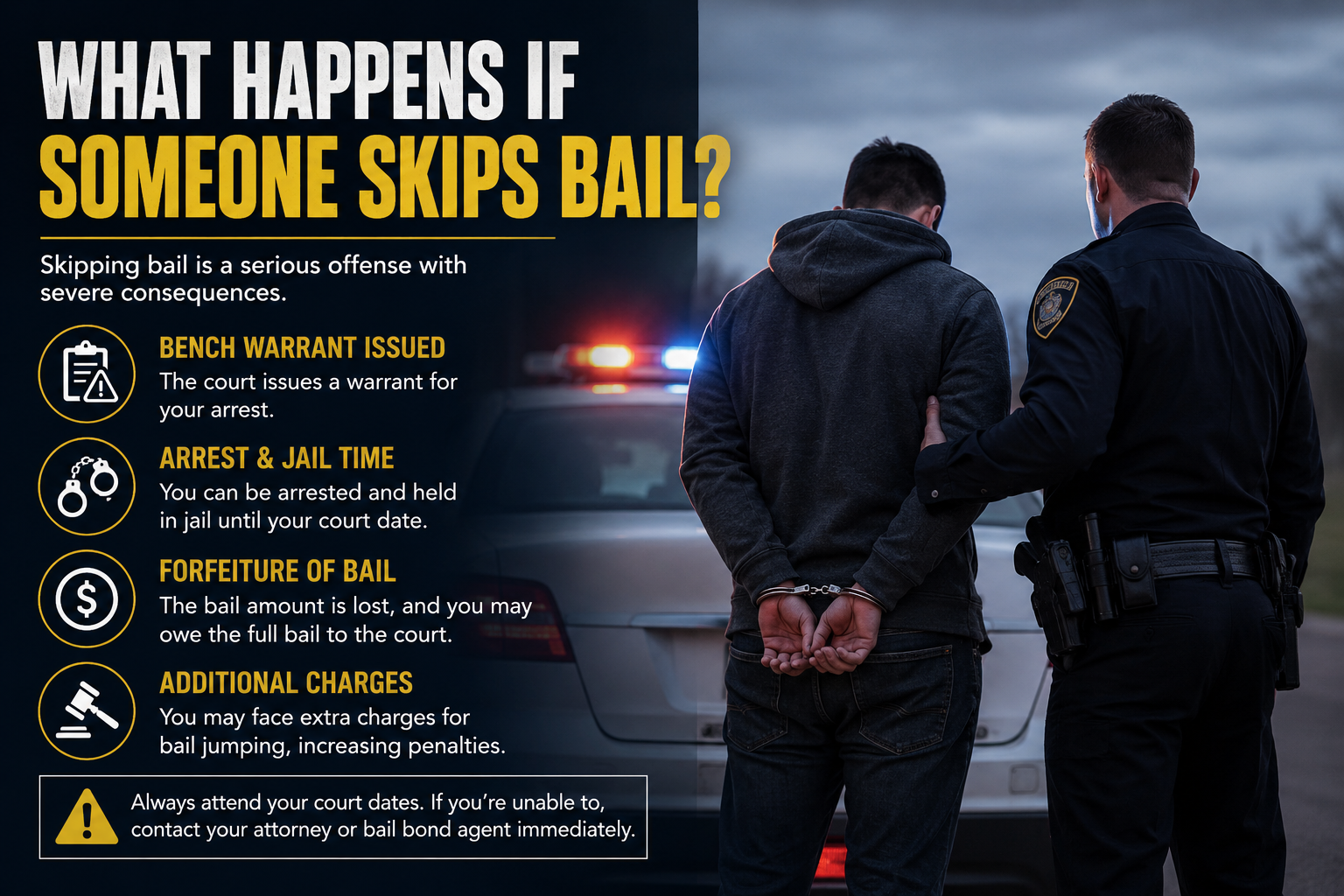
Few things create more anxiety for a family than the fear that a loved one might miss a court date after being bailed out. Skipping bail means failing to appear at a required court hearing after being released on a bail bond, and it triggers serious legal and financial consequences for both the defendant and anyone who co-signed the bond. Before that fear takes over, it helps to understand exactly what’s at stake, which is why we’ve outlined the full consequences of skipping bail in plain language below.
At Bright Bail Bonds, based in Lake Elsinore and serving jails throughout Southern California, we’ve helped countless families navigate these situations with calm, clear guidance. Our licensed agents, led by Fabian Sepulveda, believe the best way to avoid the worst outcomes is to understand them and act early.
This guide explains what skipping bail actually means, what happens the moment someone misses court, how it affects the co-signer financially, the legal penalties in California, and what you should do right away if it happens. Knowing these steps can make the difference between a manageable problem and a costly one.
Skipping Bail Means Failing to Appear in Court After Release

Skipping bail, often called “failure to appear,” happens when a defendant who was released on bond does not show up to a scheduled court hearing. It’s important to understand that this refers to an unauthorized absence — not a hearing that was properly rescheduled or excused by the court.
Common situations that count as skipping bail include:
- Missing a scheduled court date without notifying the court or attorney
- Intentionally avoiding the legal process to evade prosecution
- Leaving the area or going into hiding while a case is still active
Even an unintentional missed date is treated seriously by the court, which is why staying in contact with your attorney and bail agent matters so much.
The Court Immediately Issues a Bench Warrant and Forfeits the Bond
When someone skips bail, the judge issues a bench warrant for their arrest and orders the bail bond forfeited. This sets a chain of events in motion almost immediately, and the longer it goes unaddressed, the harder it becomes to resolve.
Here’s what happens right away:
- A bench warrant is issued — law enforcement is authorized to arrest the defendant on sight.
- The bond is forfeited — the court calls on the full bail amount that was guaranteed.
- The surety becomes liable — the company that backed the bond is now responsible for that amount.
- Collateral is put at risk — any property or assets pledged to secure the bond can be claimed.
This is the point where a missed court date stops being a private matter and becomes an active legal and financial problem.
The Co-Signer Becomes Financially Responsible for the Full Bail
When a defendant skips bail, the co-signer — also called the indemnitor — can be held financially responsible for the entire bail amount. This is the single most important risk for families to understand before signing a bail agreement, because it means the cost can extend far beyond the original premium.
If the bond is forfeited and the defendant isn’t returned to custody, the co-signer may be required to pay the full bail figure and could lose any collateral they pledged. This is precisely why Bright Bail Bonds explains a co-signer’s obligations clearly before anything is signed — so you understand the responsibility you’re taking on and how to protect yourself by helping the defendant stay on track.
What Are the Legal Penalties for Skipping Bail in California?
In California, skipping bail is a separate crime, meaning the defendant can face new charges on top of the original case. Failing to appear is treated as its own offense, and the severity depends on whether the underlying charge was a misdemeanor or a felony.
The potential penalties include:
- Additional criminal charges for failure to appear, which can be a misdemeanor or felony
- Extra jail time and fines added to whatever the original case carries
- A damaged record that makes it harder to be granted bail in the future
- Loss of credibility with the court, which can affect how the original case is handled
In short, skipping bail almost always makes a difficult situation considerably worse.
California Bail Agents Have a Limited Window to Locate the Defendant
After a bond is forfeited, California law provides a limited period — generally around 180 days — during which the defendant can be returned to custody to have the forfeiture set aside. This window is one of the most important and least understood parts of the process, because acting within it can prevent the full bail amount from coming due.
During this period, the bail agent and surety may work to locate the defendant, sometimes with the help of a licensed recovery agent. If the defendant appears in court or is returned to custody in time, the bond can often be reinstated or exonerated. This is exactly why contacting your bail agent the moment a court date is missed gives everyone the best chance at a good outcome.
What Should I Do if Someone I Co-Signed for Misses Court?
If someone you co-signed for misses court, the most important thing is to act immediately rather than wait and hope it resolves itself. Quick action protects both the defendant and your own finances. Take these steps right away:
- Contact your bail agent immediately. Call Bright Bail Bonds so we can explain your options and begin working on a solution.
- Encourage the defendant to appear or surrender as soon as possible. Returning to court voluntarily is almost always better than being arrested on a warrant.
- Speak with the defendant’s attorney. In some cases, an attorney can help address the missed date or request the warrant be recalled.
- Stay in communication. Keep everyone informed so the bond can be resolved within the available window.
The families who reach out early almost always have more options than those who wait — and our team is available around the clock to help.
Frequently Asked Questions About Skipping Bail
Is skipping bail a separate crime in California?
Yes. Failing to appear in court is treated as its own criminal offense in California, separate from the original charges. Depending on the underlying case, it can be charged as a misdemeanor or a felony, adding new penalties on top of the existing ones.
Can a bench warrant for skipping bail be cleared?
In many cases, yes. A bench warrant can sometimes be recalled or “quashed,” often with the help of an attorney, especially if the defendant appears voluntarily. Acting quickly and returning to court greatly improves the chances of a better outcome.
Will I lose my collateral if the person I bailed out skips?
You can. If the bond is forfeited and the defendant isn’t returned to custody within the allowed period, any collateral you pledged may be claimed to cover the bail amount. Returning the defendant to court within that window is the best way to protect it.
Does skipping bail by accident carry the same consequences?
An accidental missed date still triggers a bench warrant and bond forfeiture, but it can often be resolved more easily if you act fast. Contacting your bail agent and attorney immediately, and getting back before the court promptly, can sometimes limit the damage.
As a co-signer, can I be arrested if the defendant skips bail?
No, a co-signer is not arrested for the defendant’s failure to appear. However, you can be held financially responsible for the full bail amount and may lose any collateral you pledged, which is why early action is so important.
The Smartest Move Is to Stay in Contact — We’re Here to Help
Skipping bail leads to a bench warrant, a forfeited bond, serious financial exposure for the co-signer, and additional criminal charges for the defendant. The good news is that nearly all of it is avoidable by attending every court date and reaching out the moment a problem appears.
If a court date has been missed or you’re worried one might be, don’t wait. The licensed team at Bright Bail Bonds is available 24/7 across Southern California to help you understand your options and protect what matters. Call Fabian and our agents at 888-669-0295 for clear, compassionate guidance when you need it most.